

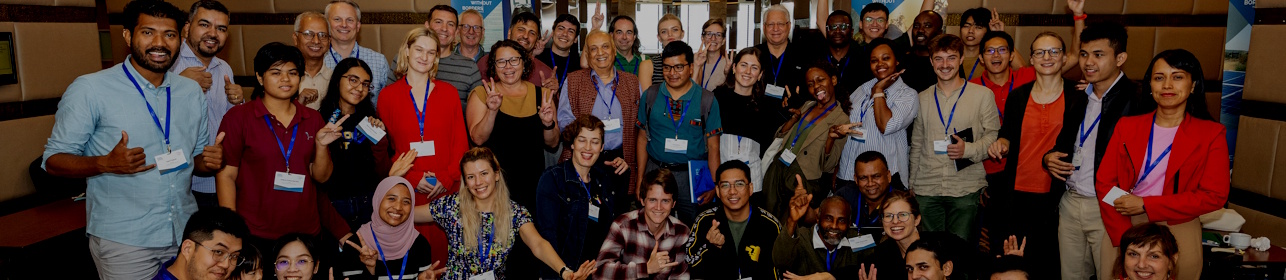

Delivered by Engineers Without Borders Argentina
The Challenge in Kilómetro 13
In Kilómetro 13, a neighborhood in Buenos Aires, more than 200 families live without basic services such as sanitation, piped gas, or adequate housing. Flooding regularly disrupts daily life and damages property, and child poverty affects seven out of ten children across Argentina. In this community, the impact is especially severe.
A Lifeline for Families
Since 1985, the community center Por un Mundo Mejor (“For a Better World”), founded by local women, has been a safe haven. It has provided education, nutritious meals, and recreational activities despite limited resources. Mothers have relied on the center to care for their children while they work, study, or earn an income. By 2024, however, demand had outgrown the facilities. With more than 120 children attending daily, the two small classrooms could no longer accommodate age‑appropriate activities, and the forty‑year‑old buildings urgently needed upgrading.
Educator Analía Cabeza captured the anticipation of change when she said: “I am very happy to know that the center is already being built; I close my eyes and imagine myself inside, imagining where I will place the cupboard, the materials.”
A Community‑Driven Solution
Ingeniería sin Fronteras Argentina (ISF‑Ar) stepped in to lead a redevelopment project that would transform the center. The vision was to expand infrastructure to welcome more children, create dedicated spaces for different age groups, and ensure long‑term sustainability through flood‑resilient design and community ownership.
Community Leader Paulina Álvarez explained the urgency: “We have a lot of kids, but we don’t have space; we’re all crowded. I think this will change a lot for us who are here and even more for the children.”
Building with Resilience
Over seventy‑two coordinated workdays, one hundred and forty‑seven volunteers — fifty‑seven percent of them women — contributed their time and skills. Together they built a fifty‑square‑meter enclosed classroom for early childhood activities and a seventy‑square‑meter semi‑covered space for older children and community programs. Existing buildings were upgraded to improve safety and usability, and the new structures were constructed using a light steel frame system to reduce maintenance requirements. To protect against flooding, the facilities were elevated above ground level, ensuring they remained dry and functional during recent flood events.
Partnerships and Support
The project was made possible through strong partnerships with organisations such as Fundación Siemens, Saint Gobain, and United Way, which provided funding, materials, and expertise. More than twenty‑one thousand five hundred US dollars were secured through donations and corporate volunteering, and the total project cost reached sixty‑four thousand three hundred and eighty‑four US dollars.
Impact on the Community
The redevelopment has already changed lives. One hundred and twenty‑two children and adolescents now benefit directly from safe, age‑appropriate spaces, while fourteen women workers have secure jobs at the center. More than five hundred community members benefit indirectly from the improved facilities. New families continue to enroll their children, showing the value the center holds for local people.
Empowering Women, Strengthening Leadership
Beyond the physical transformation, the project has strengthened community leadership. Younger women are stepping forward to support the original founders, ensuring continuity of ownership and sustainability. With their children safe and cared for, mothers are empowered to work, study, and build financial independence.
A Symbol of Hope
“This centre has been a safe haven for our children for decades. Expanding it means giving them a brighter future and empowering women, who have kept this dream alive,” said Adan Levy, Executive Director at Engineers Without Borders Argentina.
The story of Por un Mundo Mejor shows how responsible engineering, community empowerment, and sustainable construction can create safe spaces for children while supporting mothers to work. It is a story of hope, resilience, and opportunity for Kilómetro 13 and beyond.