


In the global development sector, a persistent challenge remains: how to transition from fragmented, short-term infrastructure projects to sustainable, community-wide systems transformation. Historically, rural infrastructure planning has operated in silos; a water borehole dug here, a solar mini-grid installed there, with little technical integration or long-term lifecycle planning.
The result is a well-documented systemic failure, with up to 30% of rural infrastructure systems breaking down within five years of completion.
To break this cycle, Engineers Without Borders East Africa conceived, designed, and launched the Nexus+ Project, coordinated on the global stage with Engineers Without Borders International and enabled by industrial technology leader Trimble Inc and an advisory working group (Buildherthon).
This initiative represents a paradigm shift in how community-led infrastructure is mapped, engineered, and funded. By pairing Trimble’s world-class geospatial and digital infrastructure technology with Engineers Without Borders East Africa’s deep, locally grounded engineering expertise, we are supporting a replicable blueprint for resilient community development driven entirely by local authority.
Unlocking Stranded Capital Through Project Preparation
While traditional development frameworks treat rural infrastructure deficits purely as a funding problem, an objective analysis of frontier markets reveals a far more stubborn bottleneck: project preparation.
Across regions like Eastern Uganda, public money for water, sanitation, energy, and schools frequently exists on paper. Under the Ugandan government’s decentralized Parish Development Model (PDM), the parish has been placed at the absolute center of local budgeting, planning, and service delivery. Yet, public funds often remain frozen and undrawn. Local authorities operating with underfilled technical posts frequently lack the surveyors, planners, and cost engineers needed to produce bankable, audit-ready project designs. The capital is theoretically allocated, but practically inaccessible.
By treating geospatial data as an instrument of project finance rather than just construction efficiency, Engineers Without Borders East Africa’s Nexus+ project converts this dormant public capital into buildable, investment-ready infrastructure pipelines.
Grounded in Local Authority: The EWB East Africa Footprint
Because Nexus+ is a homegrown initiative designed and delivered entirely by Engineers Without Borders East Africa, it skips the pitfalls of traditional, top-down donor interventions. Headquartered in Kampala-Uganda, Engineers Without Borders-East Africa holds absolute ownership of the project’s technical design, field execution, and institutional relationships.
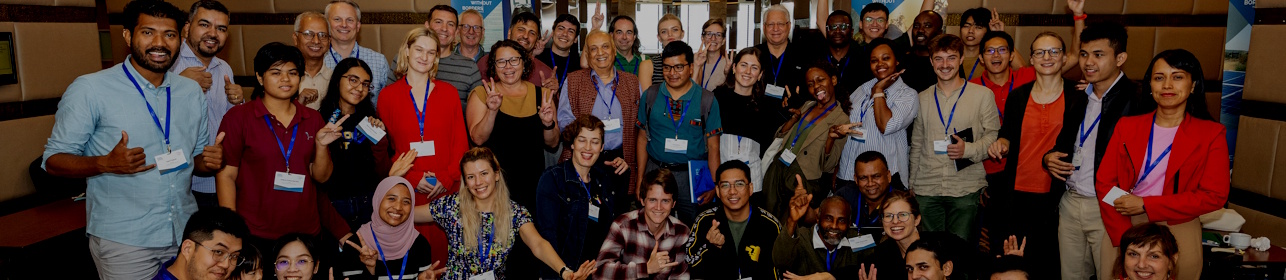
Rather than importing foreign ideas, Engineers Without Borders East Africa addresses the local capacity shortfall by deploying its own professional engineering teams alongside the next generation of Ugandan technical leaders. The project has recruited, trained, and deployed 63 engineering students from multi disciplines to conduct localized community led infrastructure asset and resource evaluation audits. Furthermore, EWB-EA is actively building a lasting technical vanguard by embedding engineering students from top national institutions, including Kyambogo University and Uganda Christian University (UCU), directly into the project’s field operations.
For these participants, working on an EWB-EA project radically reshapes how engineering is practiced. Munguryek Anyango Miriam, a final-year Bachelor of Science in Civil and Environmental Engineering student at Uganda Christian University, was among the very first cohort deployed by EWB-EA to Eastern Uganda-Bukoona Parish for community-led asset evaluation. When reflecting on how the deployment transformed her professional outlook, she shared:
“I now see that for engineering solutions to thrive in community development, one needs to grasp the context of that community before developing a solution. Communities are complex systems and provide different contexts. Applying one seemingly viable solution may not work for another community facing a similar issue.”
This deep, context-aware analytical approach is hardcoded into EWB-EA’s proprietary 5-step project methodology:
- Inclusive Evidence Generation: Deploying local teams to establish baseline data while maintaining deep community validation.
- Spatial Infrastructure Mapping: Mapping existing water, energy, and social assets using advanced positioning ecosystems to pinpoint exact structural deficits.
- Engineering Definition: Translating community data into technically viable, resilient civil models.
- Integrated Master Planning: Weaving separate utility sectors into a unified, costed parish master plan aligned directly with national PDM infrastructure pillars.
- Investment Packaging: Transmuting engineering plans into structured portfolios complete with financial modeling and cost-benefit analyses—to capture public-private partnerships (PPPs) and commercial investment.
“Working with Trimble can help unlock these frozen funds and deliver essential master plans, financial models, and engineering skills at the required scale,” notes Peter Nzabanita. By executing this disciplined sequence, EWB-EA systematically de-risks the pipeline for local government and financial stakeholders, turning a vague local aspiration into an investable proposition.
The Power of Spatial Evidence: Trimble‘s Technology Impact
A project of this technical depth requires world-class toolsets, which is where strategic corporate enablement comes into play. Trimble’s involvement in Nexus+ is a prime example of how global corporate partners should support local institutional ownership. Instead of running a separate, siloed corporate social responsibility initiative, Trimble has invested its advanced technology, technical expertise, and £95,000 of financial backing directly into EWB-EA’s existing framework.
By supplying precision GNSS hardware, real-time correction services, and GIS software, Trimble equips EWB-EA’s field teams to visualize infrastructure intersections in real time. EWB-EA’s engineers use these high-precision spatial toolsets to map out rural assets with centimeter-level precision. This eliminates guesswork which never survives an investment committee and provides the unassailable data foundation required to satisfy national oversight requirements and release stranded public budgets.
For the student engineers on the ground, this technical backing translates into rapid professional development. When evaluating the skills she developed during the fieldwork, Munguryek Anyango Miriam highlighted how this exposure built her confidence:
- Evolving Field Mastery: “Operating the high-precision Trimble positioning systems in the field transformed how I view data collection. Being able to translate real-world physical structures into accurate, live digital maps gave me an immense amount of confidence. It made the engineering principles we learn in textbooks suddenly feel tangible and practical.”
- Future Horizons: Moving forward, Miriam notes a strong drive to build upon her community focus group facilitation skills and further develop her engineering report writing—harnessing field data to draft the comprehensive master plans that institutional investors require.
Scaling the Impact: Global Quality Assurance
To guarantee that EWB-EA’s engineering master plans meet rigorous international benchmarks and command absolute investor confidence, the project intentionally integrates specialized independent validation layers.
This includes convening the BuildHerThon Working Group to bring senior female leaders from across the global infrastructure and construction sectors into an auxiliary review role. By leveraging external experts to audit feasibility proofs, author independent technical risk statements, and issue readiness opinions, EWB-EA ensures its project outputs meet an unprecedented standard of engineering transparency. This framework proves that when local project owners invite rigorous global quality assurance, rural infrastructure can confidently interface with institutional capital.
A Replicable Framework for Global Markets
To date, EWB-EA’s Nexus+ project aims to reach over 12,500 people across 20+ villages in Eastern Uganda. But the ultimate ambition of this homegrown model is explicitly global.
By proving that the binding constraint on rural infrastructure is often informational and technical rather than purely fiscal, EWB-EA has designed a repeatable workflow that can travel to resource-constrained systems worldwide. When global technology leaders commit to deeply investing in local engineering capacity and respecting local project ownership, we do more than fix broken infrastructure. We empower national offices like EWB-EA to engineer a resilient, self-sustaining future on their own terms.
Project Horizon: Active Milestone
As of October 2026, the intense field data collection phases across the pilot parishes in Eastern Uganda are complete. The project has successfully moved past the initial baseline mappings and door-to-door community census surveys.
The Nexus+ Project has officially advanced to its most critical analytical junction: Data Analysis, Technical Evaluation, and Parish Master Planning.
EWB-East Africa’s engineering teams, alongside university cohorts, are currently synthesizing the vast geospatial and demographic datasets captured using Trimble technologies. By evaluating these overlapping data layers, the team is identifying specific structural deficits, building cost-benefit matrices, and formatting the technical risk assessments required for the final master plans. This ongoing phase translates raw field data into the final, investor-ready infrastructure portfolios that will be presented to public, private, and development partners.
Shape the Future of Infrastructure Delivery
The Nexus+ model proves that with the right data, tools, and local leadership, rural communities can unlock the resources needed to build their own resilient futures. As we finalize the technical evaluation and prepare these parish-level portfolios for investment packaging, we invite strategic collaborators to join our ecosystem:
Follow the progress of the Nexus+ outcomes: www.ewbea.org

